
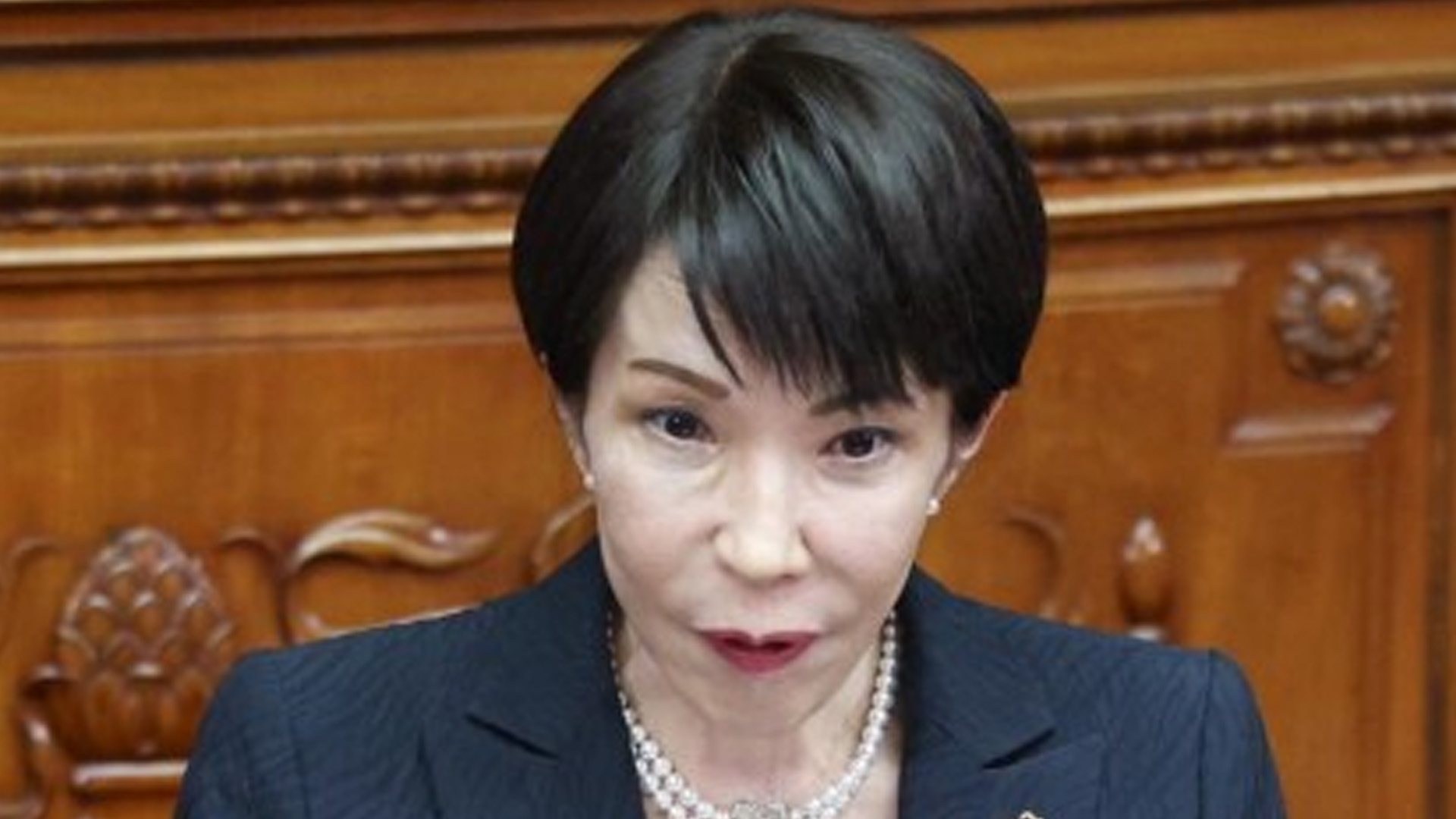






Japan’s Prime Minister Sanae Takaichi proclaimed before parliament Friday that her administration will promote investment to boost the country’s overall strength.
Delivering her first parliamentary policy address since taking office last October at a plenary meeting of the House of Representatives, Takaichi pledged her thorough efforts to reinforce Japan’s diplomatic, defense, economic, technological and intelligence capabilities as well as human resources.
To this end, Takaichi underscored the importance of capitalizing on her “proactive yet responsible” fiscal policy to “fully change the way state budgeting has been” and “end the long-standing situation in which excessive belt-tightening causes the lack of investment for the future.”
Then she proposed to introduce multi-year, separate budgets to attract investment in potential growth fields, such as crisis management and cutting-edge technology development, and to present next month a public-private investment road map.
Takaichi expressed willingness to have initial budgets cover necessary spending as much as possible while refraining from compiling supplementary budgets, a move aimed at improving the “foreseeability” of central government funding for local governments and the business sector.
Stressing that she “will keep turning on switches for growth,” Takaichi renewed her eagerness to relax labor regulations, including restrictions on discretionary work.
To beef up Japan’s intelligence capabilities, the prime minister said a dedicated government council and bureau will be set up and that work to design a system to block undue foreign interference will start with a view to the enactment of proposed anti-espionage legislation.
About national security, Takaichi observed that the situation surrounding the country “is the severest and the most complicated in the postwar period,” pointing out that China, North Korea and Russia have been enhancing their mutual military ties.
“It is necessary for our country to maintain its independence and peace with both diplomatic and defense policies,” she said, adding that her government will revise ahead of schedule the three key national security-related documents by the end of the year.
To realize a “responsible diplomacy,” Takaichi showed intention to evolve the “Free and Open Indo-Pacific” concept, originally proposed by former Prime Minister Shinzo Abe 10 years ago, so Japan can work with other countries over economic security and promote public-private growth efforts.
She also vowed cooperation with South Korea, the Philippines, Australia, India, the Association of Southeast Asian Nations, or ASEAN, and Europe based on the Japan-U.S. alliance. On relations with China, Takaichi said she will cope with issues “calmly and appropriately in view of Japan’s national interests.”
During the speech, the third longest policy address by a prime minister after the one by Ryutaro Hashimoto in 1996 and the other by Yukio Hatoyama in 2010, Takaichi noted that she, as head of the ruling Liberal Democratic Party, will strive to execute the LDP’s campaign pledges and policy agreements with its coalition partner, the Japan Innovation Party, in the wake of her party’s landslide victory in the Feb. 8 general election.
The ruling coalition intends to introduce early a bill to reduce the consumption tax rate on food to zero for two years, she said.
In addition, Takaichi called for opposition parties’ cooperation in swiftly enacting the government’s fiscal 2026 budget bill and tax system reform legislation. (PNA)